


Activites
Iceland has far more geothermal lagoons than the Blue Lagoon alone, spread from the Reykjanes peninsula to the shores of Lake Mývatn in the north. Most draw directly on Iceland's volcanic geology for naturally heated water. The setting, size and atmosphere vary widely, from large resort-style lagoons near Reykjavík to smaller, quieter pools reached only after a longer drive. This guide covers twelve of the country's lagoons and hot springs, including one new addition opening in 2026.
Blue Lagoon
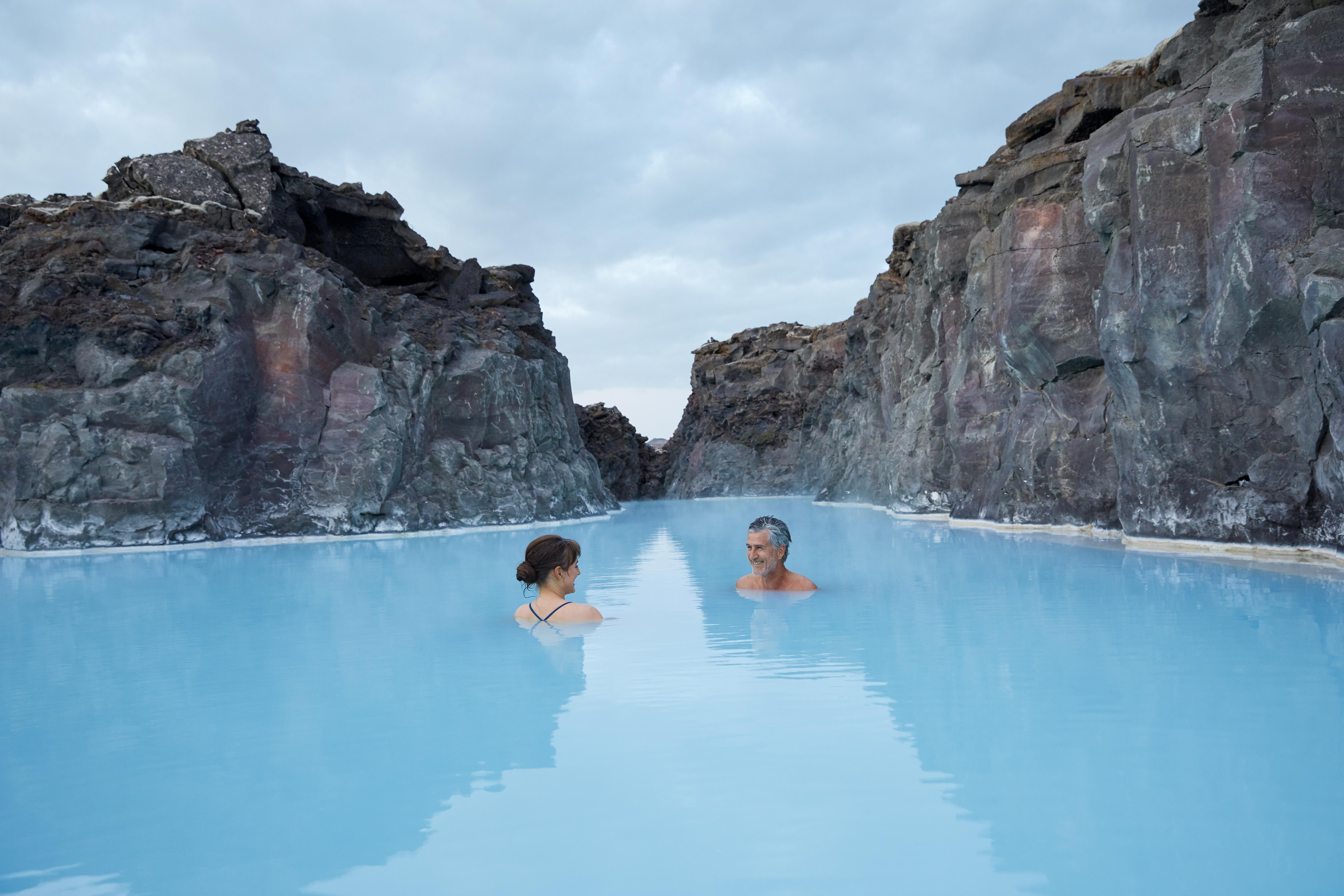
Iceland's most recognised lagoon, the Blue Lagoon, sits on the Reykjanes peninsula, roughly 45 minutes from Keflavík International Airport, and remains the country's most visited single attraction, drawing well over a million visitors each year. Its milky-blue water, rich in silica, comes from the nearby Svartsengi geothermal plant, where seawater is heated far below ground before surfacing at a steady 37 to 39 degrees Celsius. Guests coat themselves in the lagoon's silica mud, said to soften skin, then move between the main pool, an in-water bar, saunas and steam rooms built into the surrounding lava field. Beyond the main lagoon, the Retreat Spa offers a smaller, more private section with its own lagoon area, saunas, treatment rooms and a spa restaurant, well suited to travellers wanting a calmer version of the same water without the busier main pool. Because of its location, a Blue Lagoon visit often pairs naturally with time on the south coast, covered in Iceland Stopover Moments.
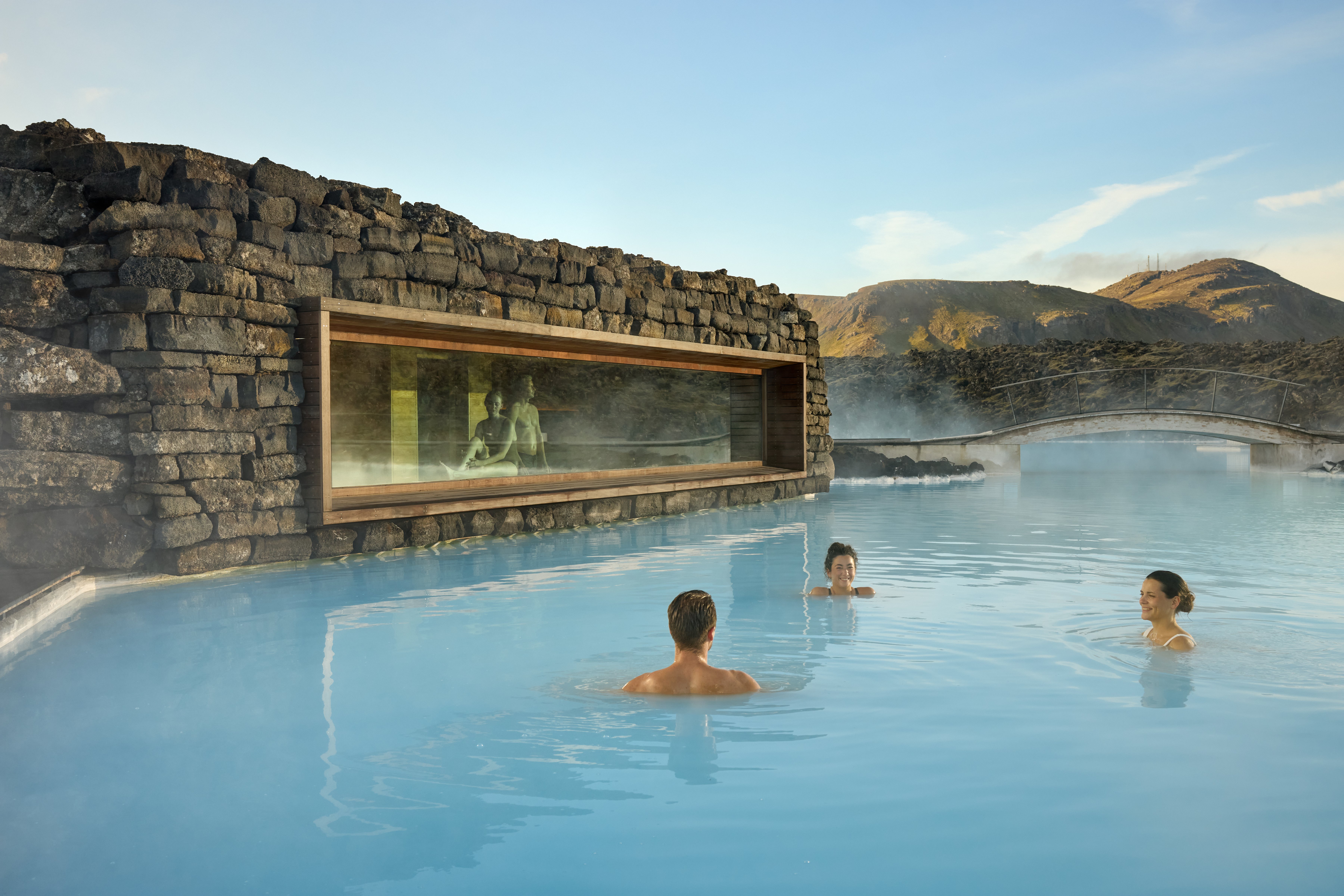
Sky Lagoon
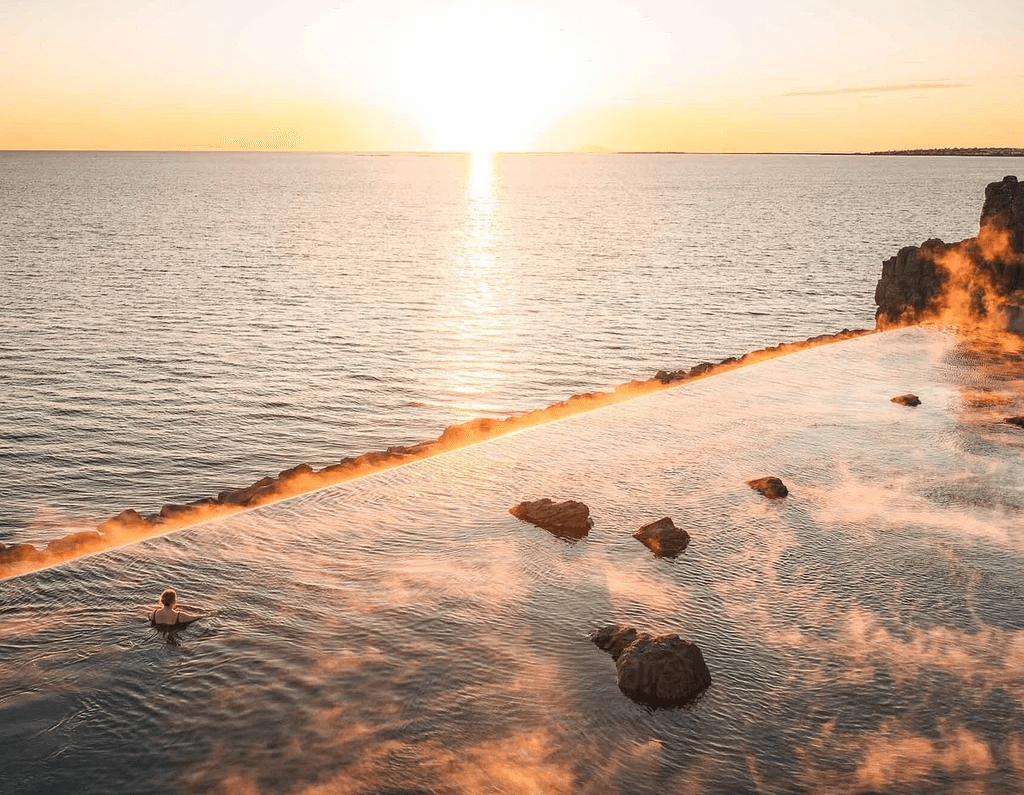
Just outside Reykjavík in Kópavogur, Sky Lagoon is built around an infinity edge that appears to merge directly with the sea beyond, with views stretching across the bay and, on clear evenings, out toward the horizon. Its well known seven-step ritual moves guests through the warm lagoon, a cold plunge pool, a sauna with sea views, a cool mist, a body scrub made from Icelandic ingredients, a steam room and a final rinse, designed to be completed in sequence rather than sampled individually. Being close to the city, roughly fifteen minutes from central Reykjavík, makes it one of the more convenient lagoons to reach without a long drive, and a popular choice for shorter stopovers as well as longer stays.
Secret Lagoon
Located in Flúðir on the Golden Circle, the Secret Lagoon, known locally as Gamla Laugin, is Iceland's oldest swimming pool site, built in 1891 and left largely unheated and unadorned by design, with a simple wooden deck around a natural pool rather than a modern spa building. Small geysers erupt at the edge of the pool every few minutes, and steam rises across the surrounding field year round. Despite the name, it is no longer much of a secret, and its position on the well travelled Golden Circle route means it draws steady visitor numbers throughout the day. The pool itself is also fairly small, so it can feel crowded quickly once a few tour groups arrive at once, worth keeping in mind for anyone expecting a quiet soak.
Forest Lagoon
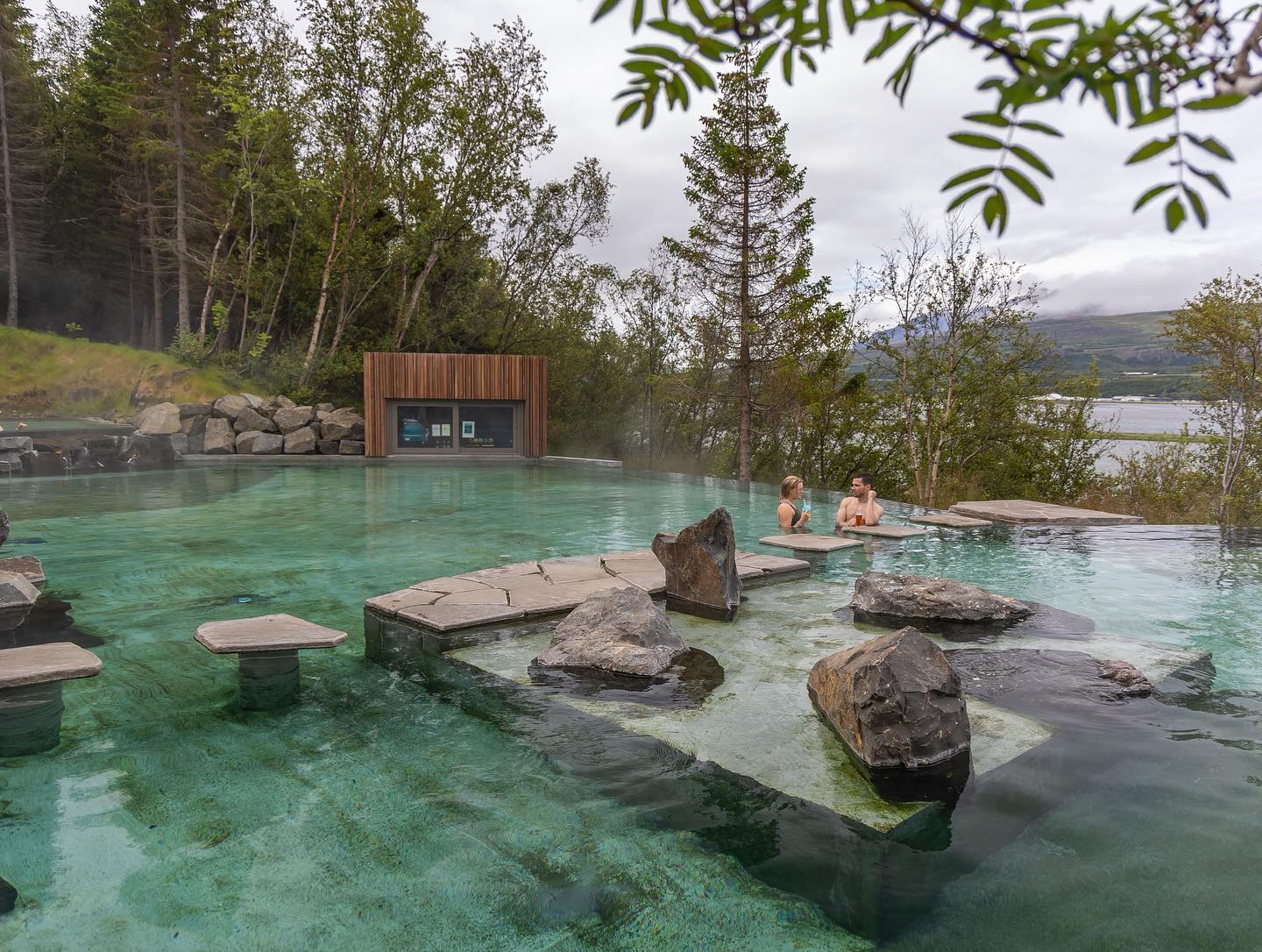
Set on a hillside above Akureyri in north Iceland, Forest Lagoon consists of two infinity pools looking out over Eyjafjörður fjord, connected by a small waterfall between the upper and lower pools, and surrounded by birch forest that gives the site its name. A swim-up bar, sauna and cold plunge sit alongside the main pools. It offers a quieter alternative to the lagoons near the capital, at the cost of a longer journey for most visitors, and is often paired with wider exploration of north Iceland rather than a single day trip.
Fontana
In Laugarvatn, also on the Golden Circle, Fontana's steam baths sit directly over active geothermal vents, with steam rising through the floor of the bathhouse itself rather than being piped in. Guests move between the steam rooms, a sauna, and geothermal pools on the shore of Laugarvatn lake, with a cold lake swim available for anyone wanting the contrast. The site also bakes its well known geyser rye bread in the ground nearby, using the same geothermal heat, and offers tastings as part of a visit.
Hvammsvík
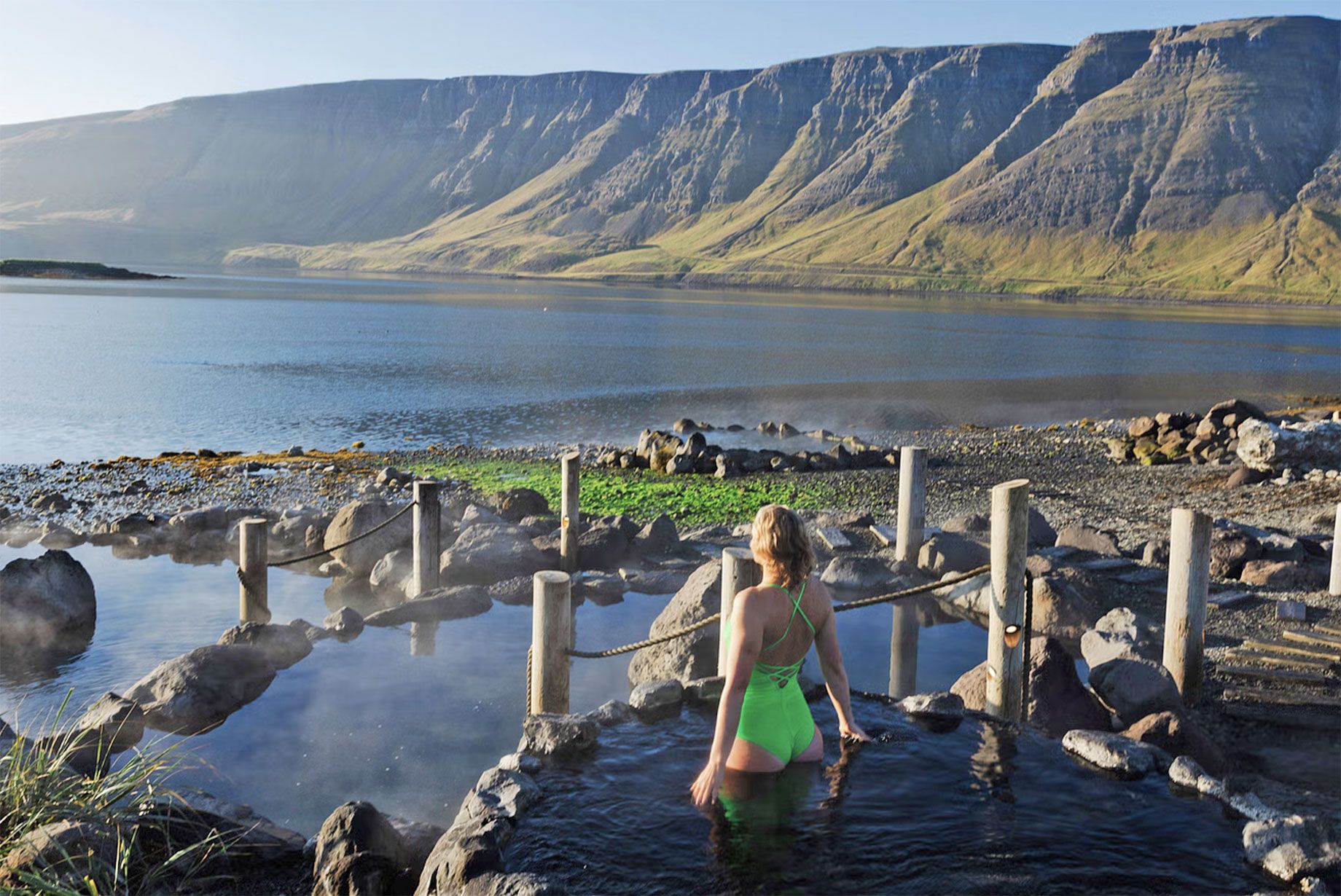
Roughly 45 minutes from Reykjavík in Kjós, Hvammsvík offers eight natural hot pools set along the shoreline, several of which are submerged or exposed depending on the tide, so the experience changes through the day. Pool temperatures vary from one to the next, allowing guests to move between warmer and cooler options, with a small beach area and changing facilities set into the hillside above. The setting is close to the capital but feels considerably more remote, framed by mountains on three sides and the sea on the fourth.
Geosea
On a cliff above Húsavík in north Iceland, Geosea uses heated seawater rather than fresh geothermal water, giving it a lighter, less mineral-heavy feel than most Icelandic lagoons. The baths look directly out over Skjálfandi Bay, a well known whale watching area, with several infinity-edge pools positioned to take in the view. Visitors sometimes spot whales from the water itself during the summer season.
Laugarás Lagoon
The newest addition to the Golden Circle route, Laugarás Lagoon opened in 2025 on the banks of the Hvítá river in the village of Laugarás. Its multi-level design includes a cascading waterfall feature over six metres long, along with a forest pool tucked into nearby trees, a cold plunge fed by glacial water from the river, and an infinity-edge pool that appears to merge with the landscape beyond. An on-site restaurant serves food inspired by the surrounding farmland.

Vök Baths
On Lake Urriðavatn in east Iceland, Vök Baths is built around floating pools set directly into the lake itself, connected by a walkway above the water. It is one of the few lagoons entirely outside the south west of the country, making it a natural stop for those travelling the Ring Road's eastern stretch rather than a dedicated day trip from Reykjavík. The site is also known for geothermally heated drinking water served on site, warm enough to use for tea without additional heating.
Earth Lagoon
Previously known as Mývatn Nature Baths, Earth Lagoon sits near Lake Mývatn in north Iceland and reopened in July 2026 after a full rebuild of the site. Its milky-blue water, drawn from a nearby geothermal borehole and rich in silica and sulphur, has led some to describe it as the Blue Lagoon of the north, at a fraction of the visitor numbers. Two steam baths sit alongside the main pool, one built into a lava cave.
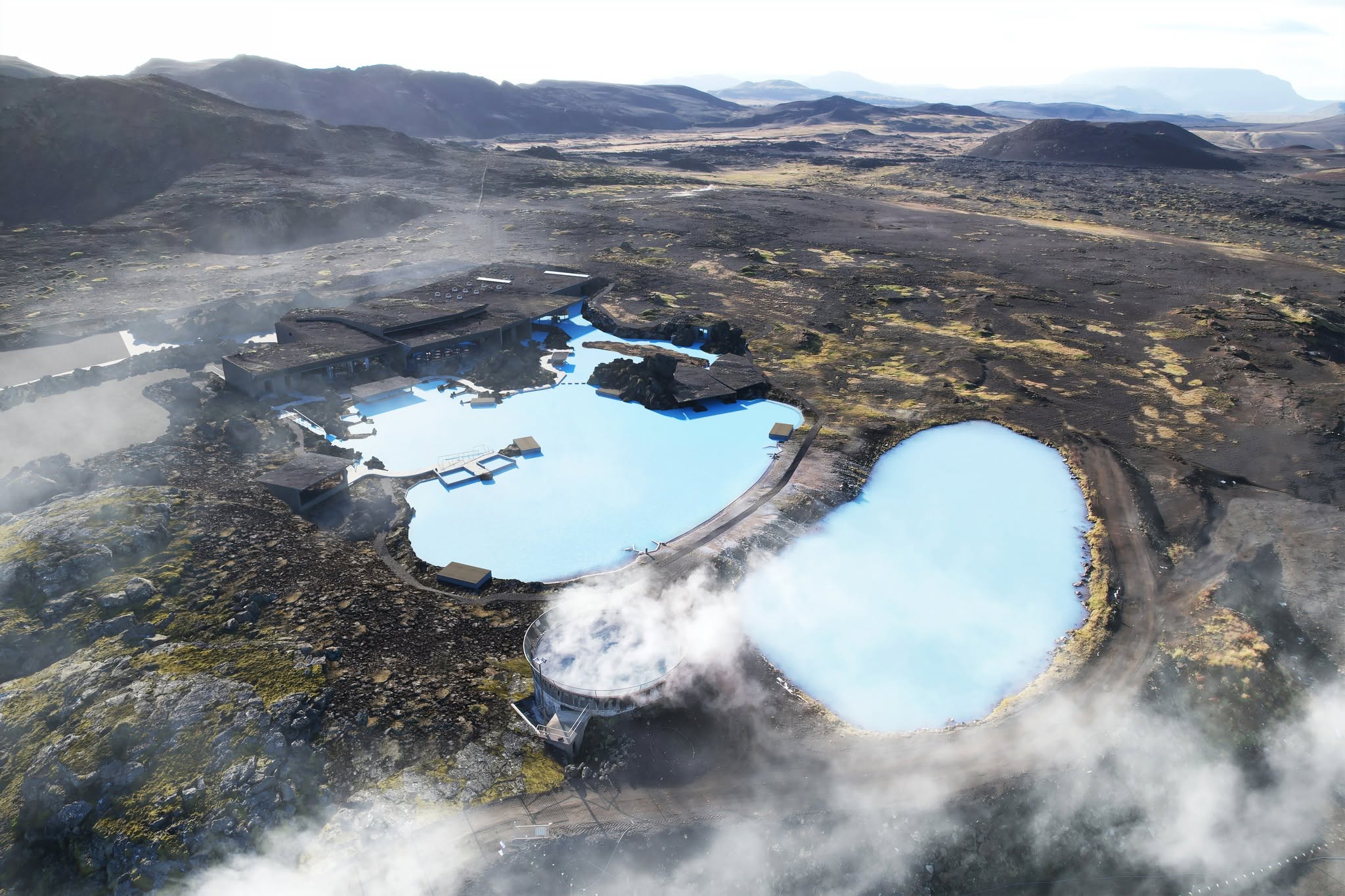
Reykjaböð Hot Springs
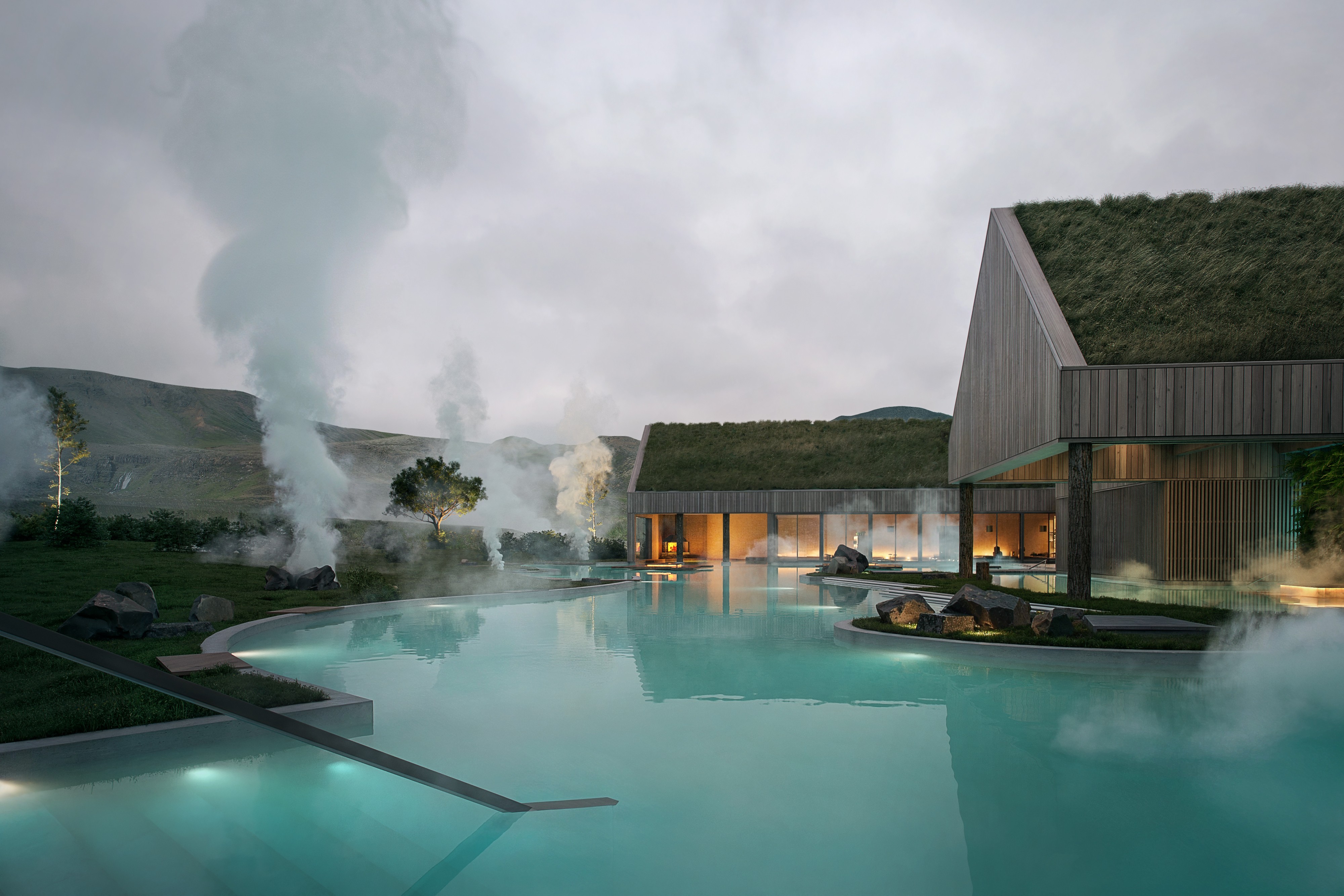
Opening in August 2026 in Hveragerði, Reykjaböð sits at the entrance to the Reykjadalur valley, around 35 minutes from Reykjavík and roughly 75 minutes from Keflavík International Airport, making it reachable on the way to or from the south coast without a significant detour. It is designed as a smaller, more nature-focused alternative to the larger lagoons near the capital, built around a geothermal lagoon, sauna, cold plunge pools and a separate bathhouse spa offering treatments for guests wanting more than a soak. Unlike the well known Reykjadalur hot river nearby, which requires a hike of an hour or more each way, Reykjaböð is reached directly by road, making it a more accessible option for a shorter stop. An on-site bistro serves food alongside the bathing facilities. Because it sits so close to the start of the Golden Circle and south coast routes, it is well positioned as a stop on the way out of or back into Reykjavík.
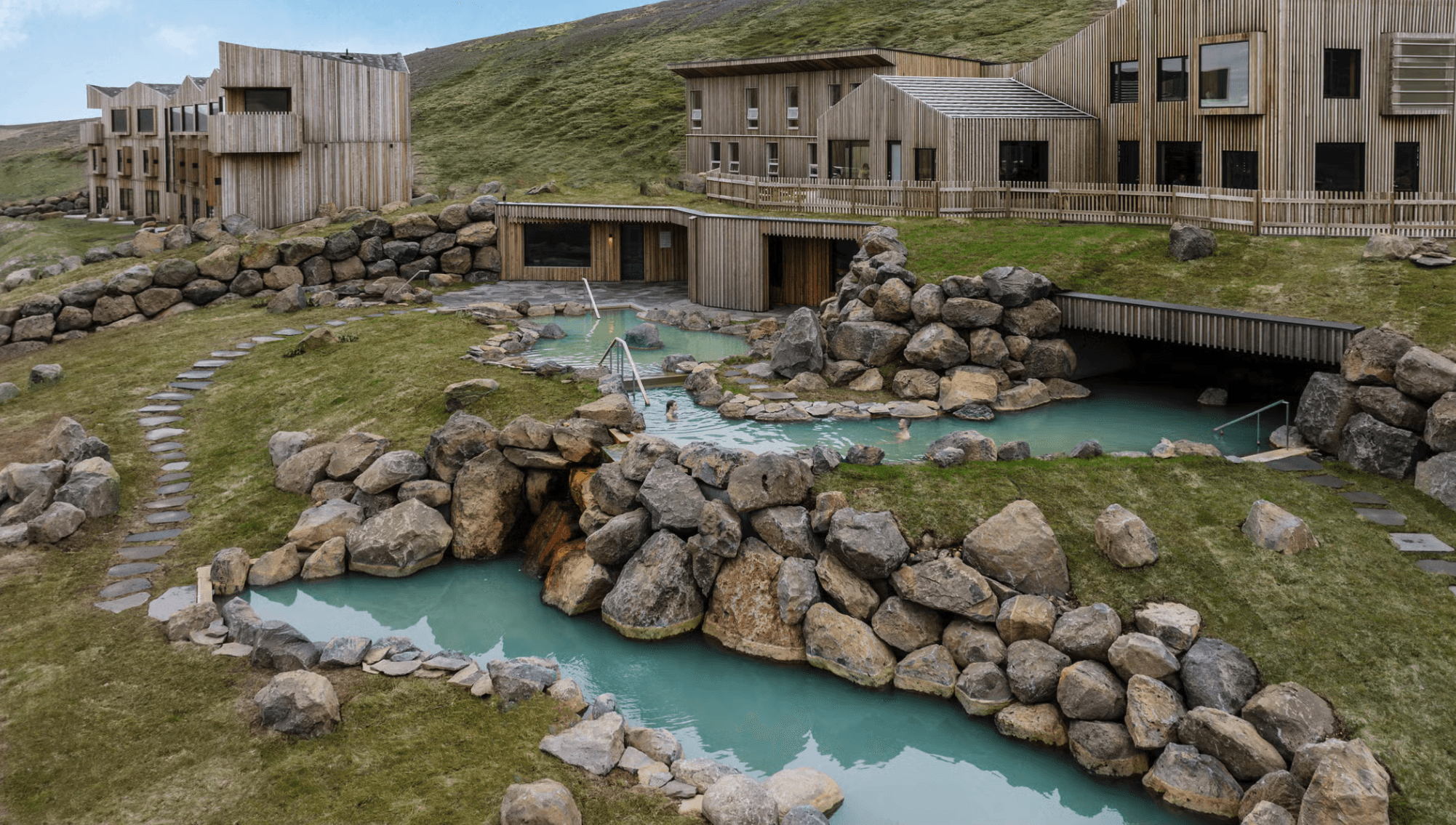
Highland Baths at Highland Base, Kerlingarfjöll
Deep in Iceland's central highlands, the Highland Baths sit at Highland Base in the Ásgarður valley, on the edge of the Kerlingarfjöll mountain range. Three interconnected geothermal pools, a sauna, a cold plunge, and a bar make up the baths, drawing mineral water from deep beneath the valley near the Hveradalir geothermal area. The setting is considerably more remote than any other lagoon in this guide, roughly three and a half hours from Reykjavík by car in summer, and reachable only by super jeep in winter. The baths are open to day visitors between mid-June and the end of September, with year-round access for anyone staying at Highland Base itself.
Frequently asked questions
Which Iceland lagoon is closest to Reykjavík?
Sky Lagoon is the closest of the well known lagoons to the city centre, with Hvammsvík and the Blue Lagoon both around 45 minutes away. While the new Reykjaböð Hot Springs are only 35 minute drive away.
Are Iceland's lagoons open all year?
Yes. Geothermal lagoons stay at a consistent temperature regardless of the season, and several, including Forest Lagoon and Earth Lagoon, are considered especially worthwhile in winter for the contrast between the warm water and cold air.
Is the Blue Lagoon worth visiting if there are quieter alternatives nearby?
The Blue Lagoon remains Iceland's most recognised lagoon, and its Retreat Spa offers a calmer version of the same experience. Many travellers choose to pair it with a quieter lagoon such as the Reykjaböð Hot Springs or Forest Lagoon on a longer trip, rather than choosing one over the other. Or even go to a new lagoon each day of your trip.
Can visiting multiple lagoons be built into a single Iceland itinerary?
Yes. A private itinerary can be arranged around several lagoons in the regions being visited, rather than treating each as a separate day trip. More on how a longer private route comes together is covered in private tours in Iceland.
How many geothermal lagoons does Iceland have?
There is no single official count, since new sites continue to open and smaller, locally run pools exist across the country. This guide covers twelve of the better known lagoons and hot springs, spanning the Reykjanes peninsula, the Golden Circle, the north and east of the country, and the central highlands.
Which Iceland lagoon is best for avoiding crowds?
Lagoons further from Reykjavík tend to see fewer visitors, including Forest Lagoon, Geosea, Vök Baths, and Earth Lagoon, all located in the north or east of the country. The Highland Baths at Kerlingarfjöll are the most remote of all, reachable only by a long drive in summer and by super jeep in winter. Closer to the capital, Hvammsvík and Reykjaböð Hot Springs are generally quieter than the Blue Lagoon or Sky Lagoon.
What is the newest lagoon in Iceland?
Laugarás Lagoon, which opened in 2025 on the Golden Circle, is the most recently opened of the lagoons covered here. While Fontana and Earth Lagoon have gone through a full rebuild and can be considered new for those who have been there before. Reykjaböð Hot Springs, opening in August 2026 in Hveragerði, will be the newest once it opens.
Do Iceland's lagoons need to be booked in advance?
Most of the larger lagoons, including the Blue Lagoon, Sky Lagoon, and Secret Lagoon, recommend or require advance booking, particularly in the summer months. Smaller or more remote sites can sometimes be visited without a reservation, though checking ahead is worthwhile regardless of the lagoon.
Which Iceland lagoon is best for seeing the northern lights?
Lagoons further from Reykjavík's light pollution, such as Forest Lagoon, Earth Lagoon, and Reykjaböð, tend to offer a clearer view of the northern lights during winter, though visibility depends on conditions rather than any single location, and no lagoon can guarantee a sighting.
About Iceland Moments
Iceland Moments is a boutique Iceland DMC specialising in private, tailored tours led by expert local guides. Every itinerary is shaped around your interests and pace, for a genuinely personal Iceland experience.





Stay updated
Sign up to our newsletter
Sign up to join our membership program for exclusive offers and experiences!
Phone number:
+3546624104
Email address:
info@icelandmoments.com
Address:
Ólafsgeisli 119, 113 Reykjavík, Iceland
Company info:
Kennitala: 620422-1340
VSK: 146303